


– Press Release –
Informational Webinar: “OncoNoesis”
As both “therapists“ and vital members of the interdisciplinary team, nurses play a significant role in the survival of oncology patients. Their education and specialization are essential to ensuring the well-being of those living with cancer and their families.
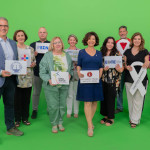
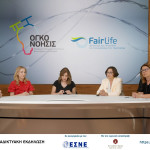
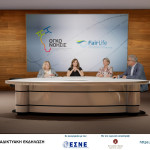
On Wednesday, June 18, 2025, 18.00 – 20.30, the informative webinar “OncoNoesis – Lung Cancer Prevention, Care and Support” was successfully held by FairLife Lung Cancer Care.
The webinar was attended in person and online by over 2000 people.
The event featured 10 distinguished speakers and commentators, who analyzed critical aspects of lung cancer care and support, with an emphasis on the role of nurses. Participation in the webinar was free and the event was broadcast live through the official FairLife L.C.C channels on Facebook and YouTube.
The “OncoNoesis” program is the first innovative, credit-bearing educational program in Greece, dedicated to nurses caring for lung cancer patients. It is implemented with the collaboration and scientific support of the Nursing Oncology Department of the Hellenic Nurses Association (ESNE), and aims to strengthen the knowledge, emotional resilience and empathy of nurses, offering them valuable tools for their daily practice.
During the webinar, the following topics were highlighted:
- An overview of the “OncoNoesis” program, including its goals, structure, and guiding principles.
- The holistic approach to lung cancer management – from prevention, information and early diagnosis to modern therapeutic interventions – with particular reference to the role of health professionals.
- The role of the caregiver and the health team in emotional support, palliative care and meaningful communication, both with the patient and their supportive environment.
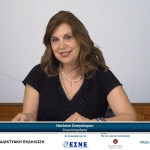
The event was coordinated by journalist Ms. Natassa Spagadorou.
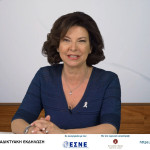
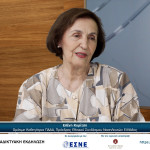
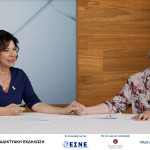
The event was welcomed by Ms. Korina Pateli – Bell, President of FairLife L.C.C. and Ms. Helen Kyritsi, Emeritus Professor, UNIWA, President of the Hellenic Nurses Association.
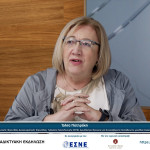
At the opening of the event, Ms. Korina Pateli–Bell, Founder and President of FairLife L.C.C., introduced the “OncoNoesis” program — an initiative shaped by the real needs and lived experiences of people impacted by cancer. She emphasized that “OncoNoesis” is the first comprehensive, credit-bearing educational program in Greece designed specifically to strengthen the role of oncology nurses. The program provides not only clinical training but also essential tools for emotional support and psychological resilience.
“Nurses are our trusted companions,” Ms. Pateli–Bell noted. “They share in peoples’ anxieties, understand the roots of emotional struggles, and help build meaningful communication. Their ability to foster trust is one of the most valuable aspects of nursing.“
“Cancer patients are like family — people close to us,” stated Ms. Helen Kyritsi, stressing that oncology patients are not just people receiving treatment, but part of nurses’ daily life. She spoke about how important it is for nurses to keep learning and stay up to date with medical advances. “Nurses”, she said, “play a big role not just in giving medical care, but also in offering emotional support to both patients and their families”. “Good care”, she added, “also helps reduce stress and burnout for nurses, while showing how important they are as care providers in every sense”. Ms. Kyritsi believes the “OncoNoesis” program will give healthcare professionals useful tools and help improve the care of people living with cancer.
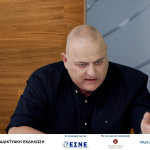
The introductory session hosted Mr. Dimitris Papageorgiou, Assistant Professor, University of Peloponnese, Head Nurse Oncology Unit, Euroclinic Athens, 2nd Vice President of ESNE. President of the ESNE Oncology Department. “It is very important that the entire team, doctors, nurses have the same instructions, the same knowledge and specialization in order to be able to properly educate patients and families.” emphasized Mr. Papageorgiou, who presented in detail the lung cancer nurse educational program, “OncoNoesis” and its goals. As he explained, recent European studies indicate that the presence of specially trained nurses is directly linked to improved survival outcomes. The new program, implemented with international accreditations (ICN, EONS), provides advanced training to 80 selected nurses from across Greece, all working in hospitals that treat a high number of lung cancer cases. Its core areas include symptom management, communication with patients and caregivers, and building mental resilience among healthcare professionals. The program also features digital educational materials, assessments, and official certifications. Mr. Papageorgiou also stressed the need for ongoing support for nurses — both to prevent burnout and to foster a collaborative care team that shares a common language and specialized expertise. “The specialized nurse is more than just a team member,” he concluded. “They are our person — the one who walks alongside the patient throughout the entire treatment journey.”
Section A – Prevention Success Depends on Screening, Smoking Cessation, Innovative Therapies, and Health Literacy – Vaping: A Trojan Horse in Smoking Prevention?
Ms. Evangelia Gizopoulou, Head of the First Pulmonary Clinic of IASO General Hospital, highlighted the crucial role of the pulmonologist in the prevention, early diagnosis and overall management of lung cancer. The common denominator is smoking and modern tobacco products, including electronic cigarettes and nicotine in new forms. “We should not change the way we smoke – we should give up completely”, stressed Ms. Gizopoulou, pointing out that we as a medical community must clearly tell the truth, especially to young people, who are a primary target of the tobacco industry. She emphasized the importance of prevention at all levels. In terms of primary prevention, she highlighted the need to inform the public—especially adolescents—through awareness campaigns and school-based initiatives. For secondary prevention, she stressed the value of early detection using modern screening tools. She also spoke about tertiary prevention, which involves managing disease complications more effectively through interdisciplinary care teams. She underscored the vital role of nurses as trusted partners to pulmonologists, capable of identifying patients’ fears, offering guidance, and encouraging adherence to treatment plans. Finally, she called for the reinforcement of smoking cessation clinics, the reimbursement of screening services, and the strict enforcement of anti-smoking legislation.
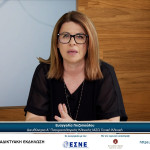
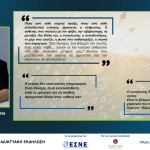
“The fight against lung cancer starts in the community, with community nurses playing a pivotal role in primary health care and being the voice of prevention and the key to a healthy future.” pointed out Ms. Dimitra Tsekoura, Nurse, MSc, PhD(c), Head of Mobile Health Team, Hellenic Red Cross, Vice President of the Community Nursing/Primary Health Sector ESNE. Ms. Tsekoura presented the alarming statistics on lung cancer both in Greece and worldwide, emphasizing modifiable risk factors — with smoking emerging as the main one — but also environmental and occupational risks, such as exposure to carcinogens and air pollution. Reference was also made to non-modifiable factors, such as genetic predisposition and gender. Speaking about the three levels of prevention, she underlined the importance of nurses’ participation in awareness-raising, education, identification of high-risk groups and preventive checks. Finally, she stressed the importance of health literacy of the population as a prerequisite for the success of any prevention strategy.
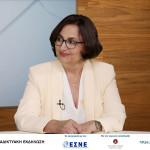
Ms. Georgia Hardavella, MD, MSc, PhD — Pulmonologist at “Sotiria” Chest Diseases Hospital, Secretary of the Thoracic Oncology General Assembly of the European Respiratory Society (ERS), Coordinator of the Lung Cancer Group (HTS), Secretary-General of the European Board of Accreditation in Pulmonology (EBAP), addressed four key questions on lung cancer screening during her presentation. She discussed the scope of screening, identifying high-risk individuals, the psychological impact of participation, and the essential role of the multidisciplinary health team. Ms. Hardavella highlighted low-dose computed tomography (LDCT) as the only validated screening method proven to detect lung cancer early and reduce mortality by up to 26%, and even up to 70% when the cancer is caught in its earliest stages. She emphasized that when screening is combined with smoking cessation efforts, the reduction in mortality can reach as high as 40%. She outlined the characteristics of high-risk groups and spoke about the importance of providing structured, accessible information to potential participants. In this effort, healthcare professionals, scientific societies, and patient organizations must work together using both printed and digital channels — especially since participation rates remain low (around 50%). Addressing concerns about emotional effects, she noted that existing evidence shows psychological impacts from screening are generally mild and short-term. Finally, Ms. Hardavella stressed the importance of collaboration, and in particular, the need to include nurses in training programs. “To speak the same language, we must all be educated together.”
Mr. Nektarios Alevizopoulos, Oncologist at Evangelismos General Hospital, described the latest advancements in lung cancer treatment as “developments that give wings to hope,” highlighting a major shift from a one-size-fits-all approach to truly personalized medicine. Modern oncology, he explained, now focuses on tailoring treatments to each patient’s unique molecular profile — a change that has led to more effective and less toxic therapies. Traditional chemotherapy, once the standard, is increasingly being replaced, especially in early-stage disease, as its side effects can often outweigh its benefits. Instead, cutting-edge technologies such as Whole Genome and Transcriptome analysis are enabling doctors to identify precise mutations and offer targeted therapies. He also emphasized the promise of a new generation of treatments using antibody-drug conjugates — innovative therapies that deliver cytotoxic agents directly to cancer cells, maximizing efficacy while minimizing harm to healthy tissue. Mr. Alevizopoulos concluded: “This progress reflects a deeper respect for every breath — for life itself. Saying yes to breath is saying yes to light, to the voice of the soul. It’s about not staying in the dark, but using science as a compass to navigate a path that is no longer suffocated by cancer.”
Section B – Nursing and Palliative Care: Centered on Honoring the Wishes of Oncology Patients and Supporting Their Families –
The failure to manage pain effectively reflects a serious shortcoming in medical care.
Drawing on his extensive clinical experience, Mr. Grigoris Stratakos, MD, PhD, Professor of Respiratory Medicine and Interventional Pulmonology, 1st Respiratory Medicine Dpt., N.K. University of Athens, “Sotiria” Hospital, President of the European Association for Bronchology and Interventional Pulmonology (EABIP), spoke about the complex challenges in communicating with lung cancer patients. He emphasized that empathy, honesty, and respect must guide every interaction. However, he noted that empathy is not automatic — it requires humility and a high level of emotional intelligence, as no one can fully understand what a patient is going through. “Doubt, fear, and confusion are often worse than the harshest truth. What patients need is a clear action plan,” he stated. Mr. Stratakos also highlighted the need for better pain management and the dispelment of myths surrounding the use of analgesics, stressing that undertreating pain is unacceptable. He addressed the emotional toll that serious illness can have within families, stressing the physician’s role in safeguarding the patient’s dignity, especially when they may be in vulnerable or unhealthy environments. Concluding, he reflected on disease as a possible catalyst for self-awareness, growth, and spiritual reflection — not only for patients but also for families and healthcare professionals around them.
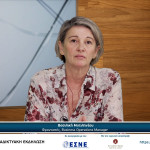
In a deeply moving and personal account, Ms. Vasiliki Mytilineou, Caregiver and Business Operations Manager, highlighted the importance of comprehensive care — not only for patients but also for caregivers. Drawing from her experience supporting her husband, who was diagnosed with ALK-positive lung cancer, Ms. Mytilineou spoke about the profound impact of timely and accurate information, access to molecular testing and targeted therapies, and continuous psychosocial support throughout the illness journey. She described the intense challenges they faced as a family — from taxing treatments and side effects to the emotional burden of navigating cancer. She emphasized the often overlooked and unsupported role of caregivers, who are expected to manage a complex range of responsibilities with little guidance. Ms. Mytilineou stressed that nurses can play a pivotal role in this journey by offering practical, emotional, and informational support, contributing significantly to the patient’s overall well-being. “Structured training, like the OncoNoesis program, is essential,” she noted. “But just as important is state support — to elevate the nursing role and strengthen the healthcare system.” She concluded by sharing real-world examples underscoring the urgent need for systemic improvements and better recognition of both caregivers and nurses.
“It’s no coincidence that nursing is so closely linked with palliative care — nurses are essential for these services to function effectively,” emphasized Ms. Elsa Patiraki, Professor of Nursing Care Systems–Palliative Care at the Department of Nursing, National and Kapodistrian University of Athens (NKUA), and Director of Research and Continuing Education at the GALILEA Palliative Care Unit. Ms. Patiraki spoke about the central role of palliative care throughout the course of serious disease, including lung cancer, stressing that it should be a core component of patient care, not an optional service. She clarified that palliative care is not about giving up on treatment, but rather about offering active, holistic support that addresses the physical, emotional, social, and spiritual needs of both patients and their families. She highlighted the flexibility of palliative care delivery — whether in hospitals, at home, in day units, or hospices — and stated that palliative care is not a luxury, but a fundamental right to ensure dignity and quality of life. “You deserve compassionate care until the very end — not just to die well, but to truly live every moment in the way you would have wanted.”
The event was held under the auspices of: European Oncology Nursing Society (EONS), Hellenic Thoracic Society (HTS) and Hellenic Society of Medical Oncology (HeSMO).
Kindly supported by:
Founding Donor: John S. Latsis Public Benefit Foundation




—
FairLife Lung Cancer Care
FairLife Lung Cancer Care (FairLife L.C.C.) is the first and only non-profit organization in Greece, exclusively dedicated to lung cancer, the leading cause of cancer-related death worldwide. FairLife L.C.C. was founded in 2020 by Korina Pateli-Bell in memory of her husband, Simon Bell, who lost the battle to Lung cancer in August of 2020.
FairLife L.C.C.’s mission is to educate and raise awareness for lung cancer prevention while providing holistic support to patients and their families throughout their journey from diagnosis to treatment.
In 2024, FairLife L.C.C. was recognized as the “Organization of the Year” at the Patient Partnerships Awards. Over its four years of operation, it has received 15 distinctions for its social impact, gaining recognition both in Greece and internationally.
More info: 1. 4 Years Anniversary video 2. Detailed report 3. Digital Booklet | Download
To support our mission:
– we promote lung cancer prevention, early diagnosis and screening to decrease mortality rates.
– we raise awareness of the value of comprehensive molecular screening.
– we provide psychosocial support to patients, caregivers and family members.
– we encourage and educate patients, institutions and the general public about the value of clinical trials and access to new innovative therapies.
– we work to eliminate the lung cancer stigma, experienced by people, impacted by the disease.
– we educate the young generation and the wider public on the benefits of clean air for lung health. To this end, we engage them in environmental awareness and sustainability actions, advocating for a healthy environment with less pollution and less lung cancer.
For more information
FairLife L.C.C.
Varis Av. 6, 16672, Vari
Phone: +30 2108980180
Information Line – FairLine: 111 57
Email: info@fairlifelcc.com
WEBSITE | YOUTUBE | FACEBOOK | LINKEDIN | INSTAGRAM | TWITTER|TIK TOK
18.07.2025