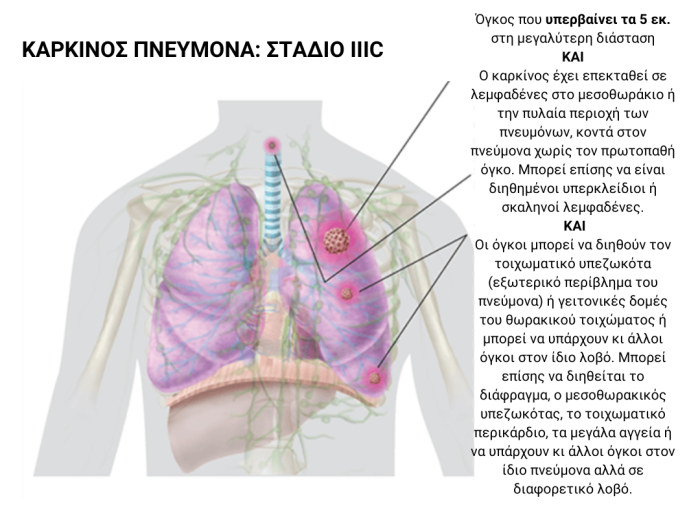


At this stage, cancer has spread within the chest but not to distant areas of the body. It is often described as locally advanced lung cancer. It is divided into three stages: Stage IIIA, IIIB, and IIIC.
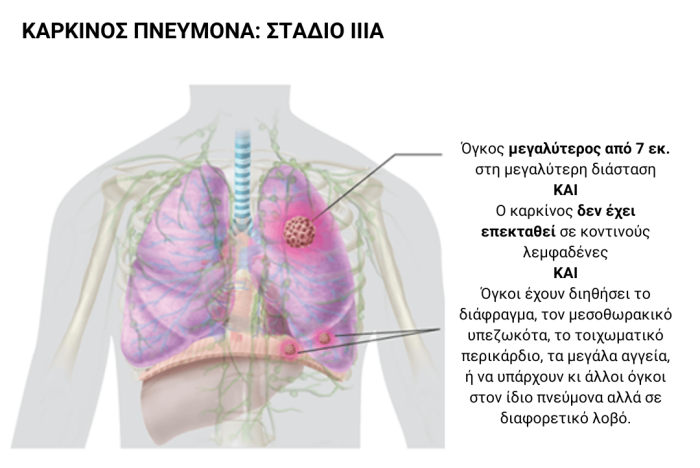
Stage IIIA tumors:
- may be larger than 7 cm in their largest dimension without spreading to nearby lymph nodes. They may have affected the diaphragm, the lining of the inner chest, the pericardium, major blood vessels, or there may be other tumors in the same lung but in a different lobe.
or
- may be larger than 5 cm in their largest dimension but have spread to local lymph nodes and/or lymph nodes at the root of the lung or/and lymph nodes of the lung with the primary tumor. Additionally, the tumors may have affected the parietal pleura (the inner membrane/covering of our chest) or neighboring areas of the thoracic wall, or there may be other tumors in the same lobe. There might also be invasion of the diaphragm (the large muscle between the abdomen and the chest), the mediastinal pleura, the pericardium, major vessels, or there may be other tumors in the same lung but in a different lobe.
or
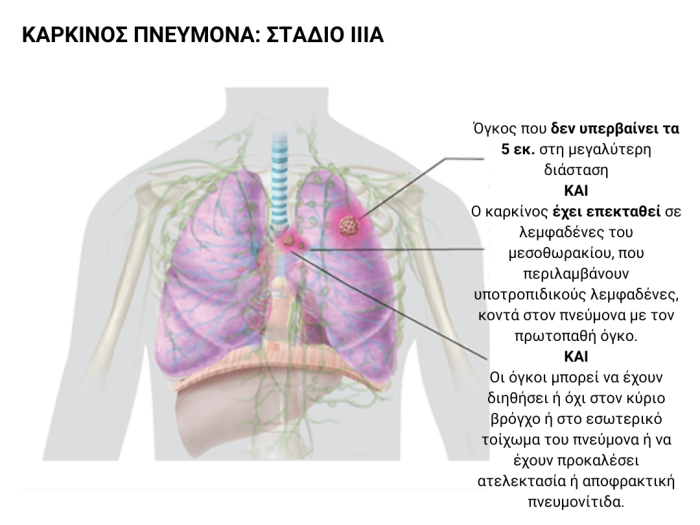
- may be small tumors but unfortunately have spread to lymph nodes in the center of the chest. The cancer may only be in the lung, or it may have spread to the main bronchus or the inner lining of the chest, or it may have caused obstruction of part of the lung due to its location and caused atelectasis or an appearance of pneumonia.
Stage IIIB tumors:
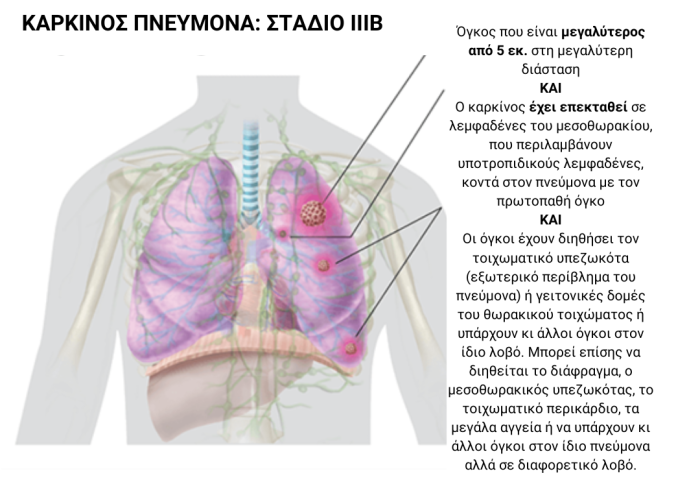
- are larger than 5 cm in their largest dimension and have spread to lymph nodes in the mediastinum, including central lymph nodes, at the root of the lung. The tumors may have invaded the inner lining of the chest, neighboring structures of the thoracic wall, or there may be other tumors in the same lobe. Additionally, there might be invasion of the diaphragm, the mediastinal pleura, the pericardium, major vessels, or there may be other tumors in the same lung but in a different lobe.
or
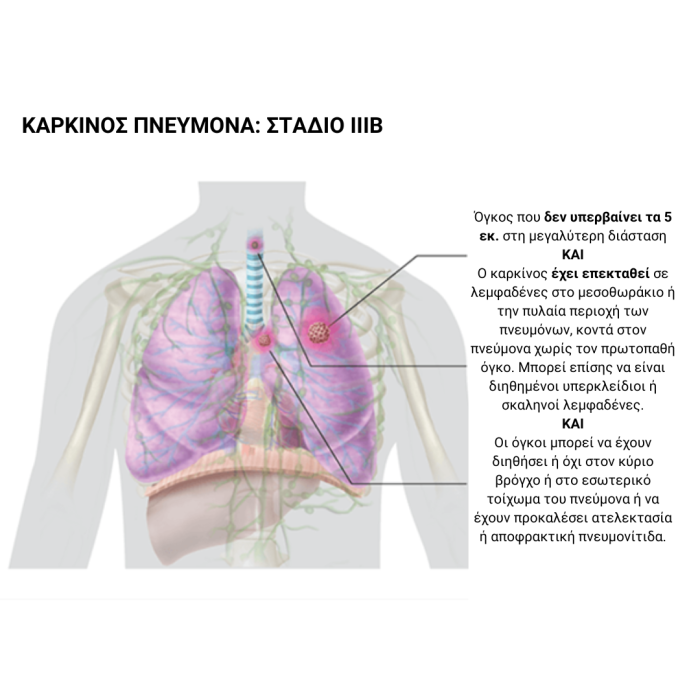
- are not larger than 5 cm in their largest dimension but unfortunately have spread to lymph nodes in the mediastinum or the roots of the lungs, close to the lung without the primary tumor. Additionally, they may involve more distant lymph nodes, such as those above our collarbone. The cancer may only be in the lung, or it may have spread to the main bronchus or the inner lining of the chest, or it may have caused obstruction of part of the lung due to its location and caused atelectasis or an appearance of pneumonia.
Stage IIIC tumors:
- exceed 5 cm in their largest dimension and have spread to lymph nodes in the mediastinum or the roots of the lungs, close to the lung without the primary tumor. They may also involve more distant lymph nodes, such as those above our collarbone. The tumors may have invaded the inner lining of the chest, neighboring structures of the thoracic wall, or there may be other tumors in the same lobe. Additionally, there might be invasion of the diaphragm, the mediastinal pleura, the pericardium, major vessels, or there may be other tumors in the same lung but in a different lobe.